The year 2025 marks the second year since the release of the EPBD IV. During this time, the Commission, Member States and the construction industry worked simultaneously to develop the right policy and to give the market the right tools to make the implementation realistic and in line with the ambitious goals of the Directive.
SmarterEPC at EUSEW 2025
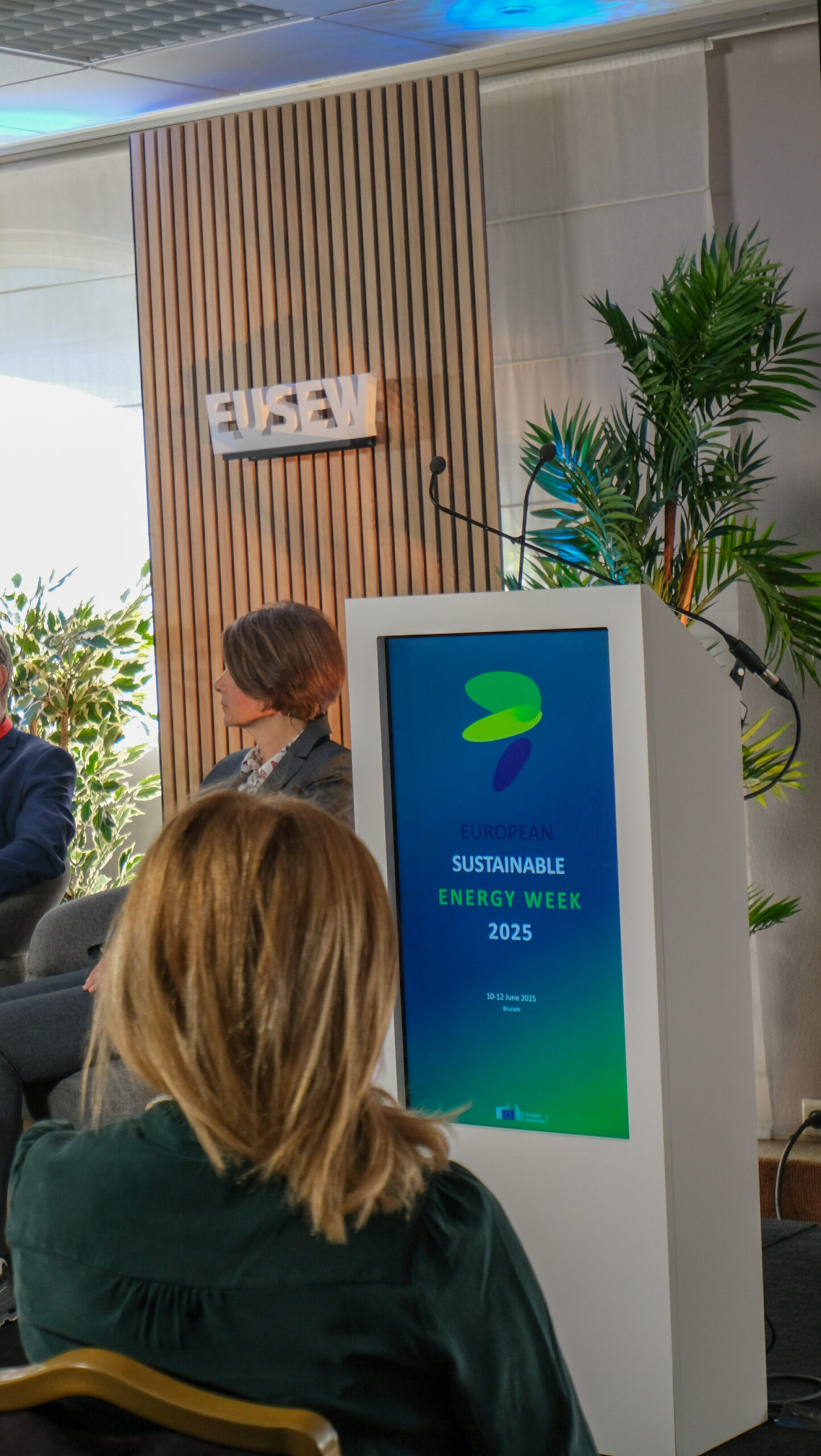
The European Sustainable Energy Week (EUSEW 2025) offered a high-level platform to spotlight the best practices and innovations emerging from EU-funded projects. Among them, SmarterEPC, alongside its Next Gen EPC Cluster partners, actively engaged with policymakers, industry leaders, and researchers to discuss technical progress and regulatory challenges in deploying next-generation Energy Performance Certificates (EPCs) and Smart Readiness Indicators (SRIs).
From Policy to Practice – SmarterEPC Recognised as a Best Practice for EPBD IV Implementation
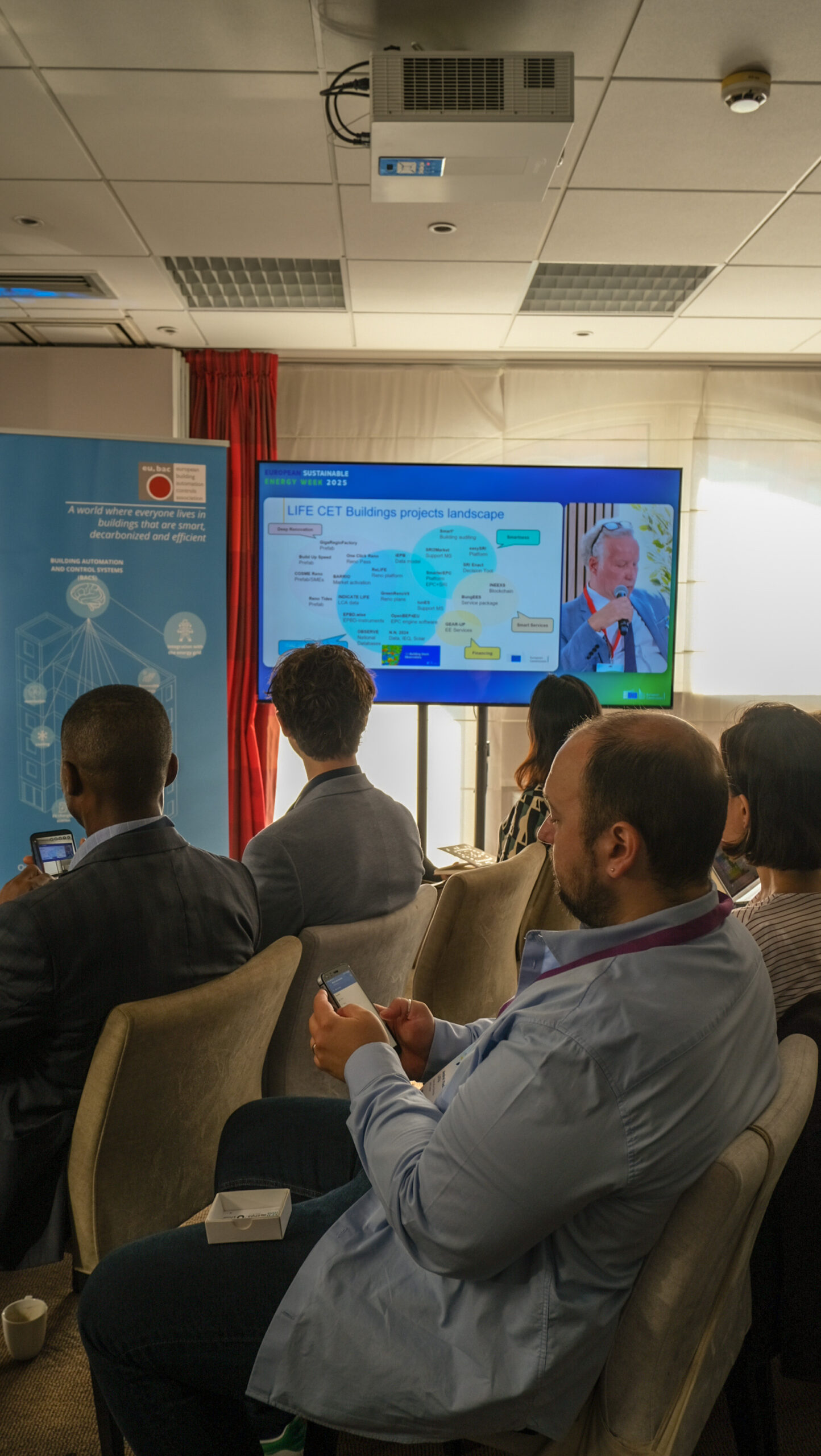
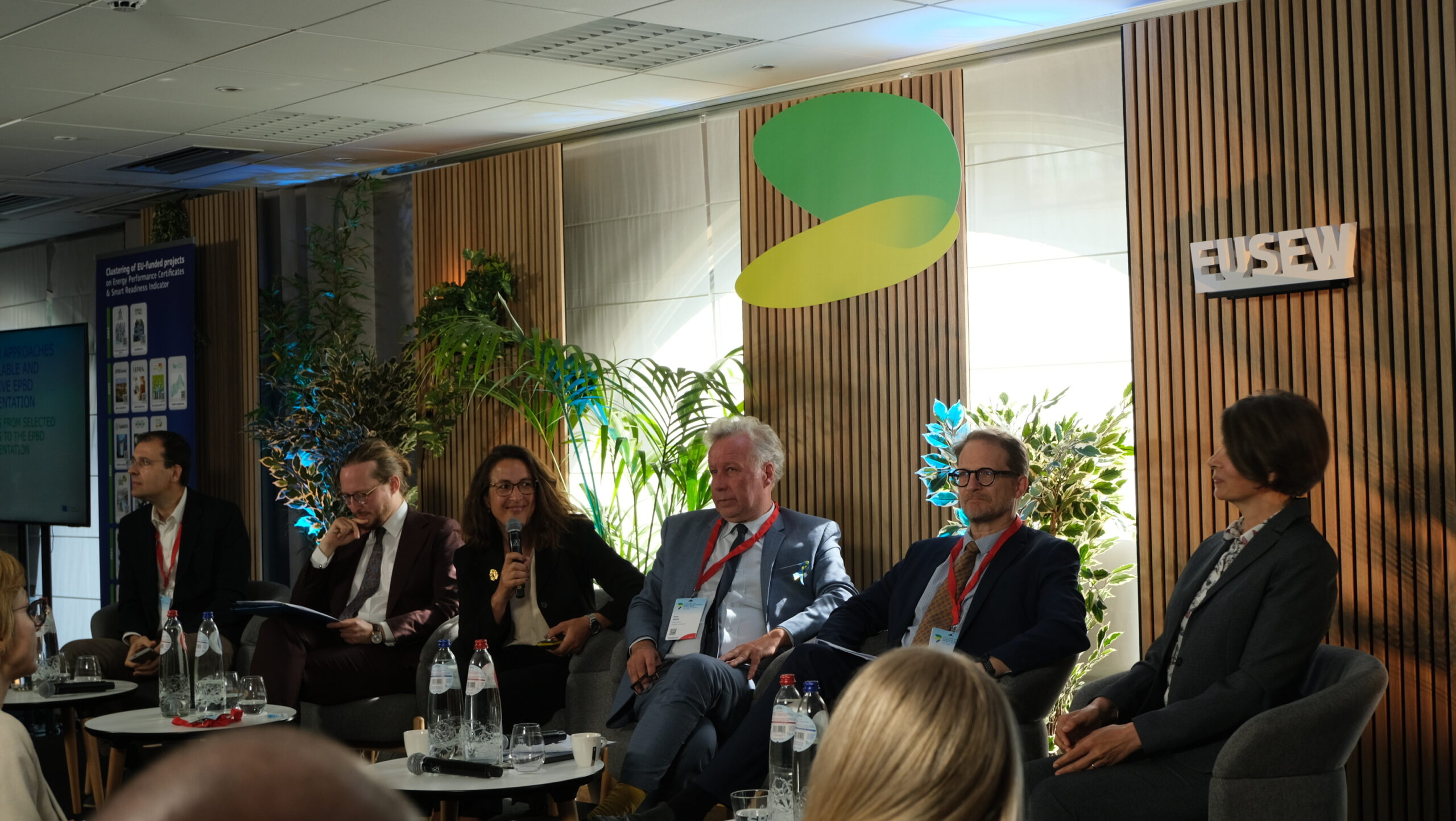
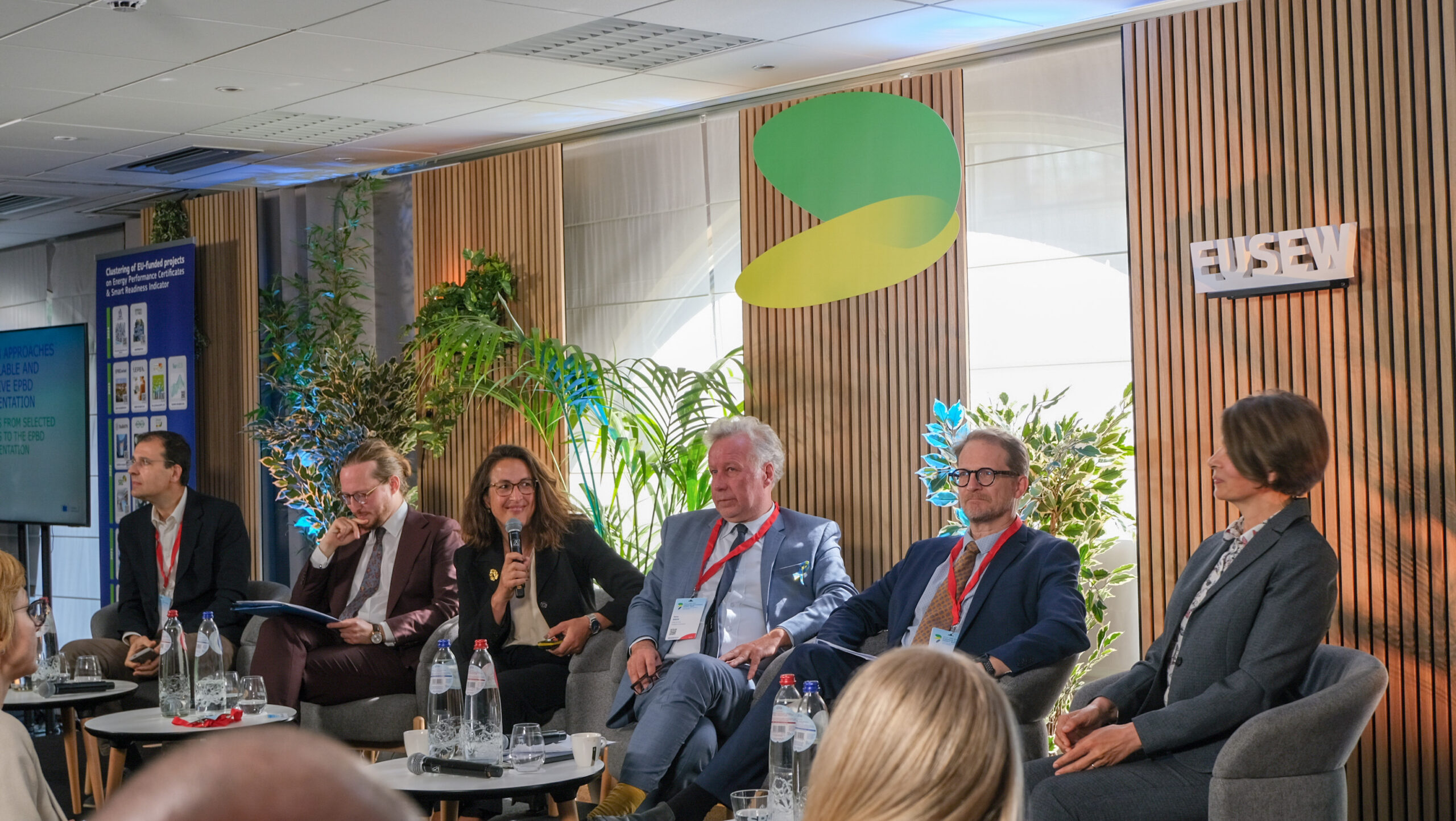
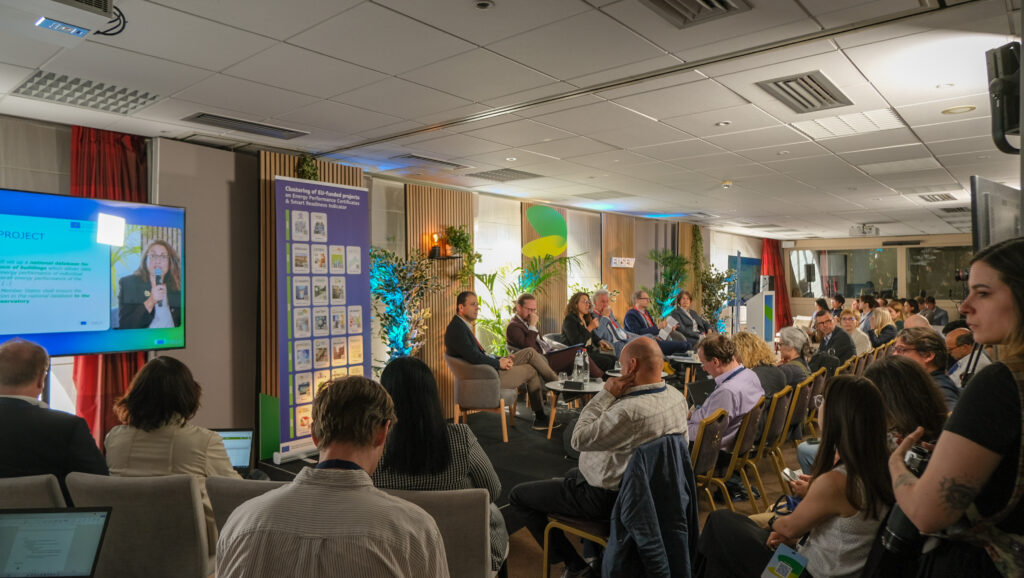
On June 12, SmarterEPC was featured during the high-level policy session, “From policy to practice: fair and competitive energy performance of buildings directive implementation.” Sophie Quarante of R2M Solution France, project coordinator, presented SmarterEPC as a model of innovation, showcasing how digital solutions can support the practical and scalable implementation of EPBD IV.
The project’s integrated approach—combining smart digital tools, policy alignment, and data-driven decision-making—was highlighted as a blueprint for transforming Europe’s building stock. SmarterEPC addresses Article 15 of the EPBD, which emphasizes the complementary relationship between EPCs and SRIs. By developing a unified methodology for conducting EPC and SRI assessments, SmarterEPC simplifies the evaluation process and audit, reducing costs and time for building assessors.
Nevertheless, the SmarterEPC HUB is further support for assessors. By putting together the tools from different projects for a better EPC and SRI assessment, the HUB provides a single interface where EPC and SRI assessments can be issued in a joint certification.
The High-level session was also attended by Hans Rhein, Head of Unit – CINEA, Niels Ladefoged, Deputy and Acting Head of Unit B3 – Buildings and Products – DG Energy, European Commission, Gusts Kossovičs, Managing Director – eu.bac, and Rui Fragoso, Head of Buildings and Efficiency of Resources – ADENE, Portuguese Energy Agency. The session was an insightful moment to present different solutions and paths to support the stakeholders in the successful implementation of the EPBD.
After presenting the requirements of the EPBD IV regarding renovation and the indoor environmental quality, as well as all the funding and actions put into place thanks to the LIFE programme, Sophie Dourlens had the chance to present the work done in SmarterEPC.
Key Takeaways from the High-Level Discussions at EUSEW 2025
The session, attended by key institutional leaders including Hans Rhein (CINEA), Niels Ladefoged (DG Energy), Gusts Kossovičs (eu.bac), and Rui Fragoso (ADENE), offered valuable insights into the critical factors for successful EPBD IV rollout. Highlights included:
Simplification of tools and technologies to ensure usability for citizens and technicians, even for minor repairs.
Clear implementation frameworks from Member States to avoid fragmented adoption and ensure market confidence.
National building databases and harmonised action plans to support consistent deployment across the EU.
Upskilling the workforce to handle new technologies and digital tools associated with next-gen EPCs.
Stakeholder engagement as a core enabler, with Portugal cited as a successful case of coordinated implementation.
Operational data and maintenance tracking, enabled by SRIs, to improve the long-term effectiveness of EPCs.
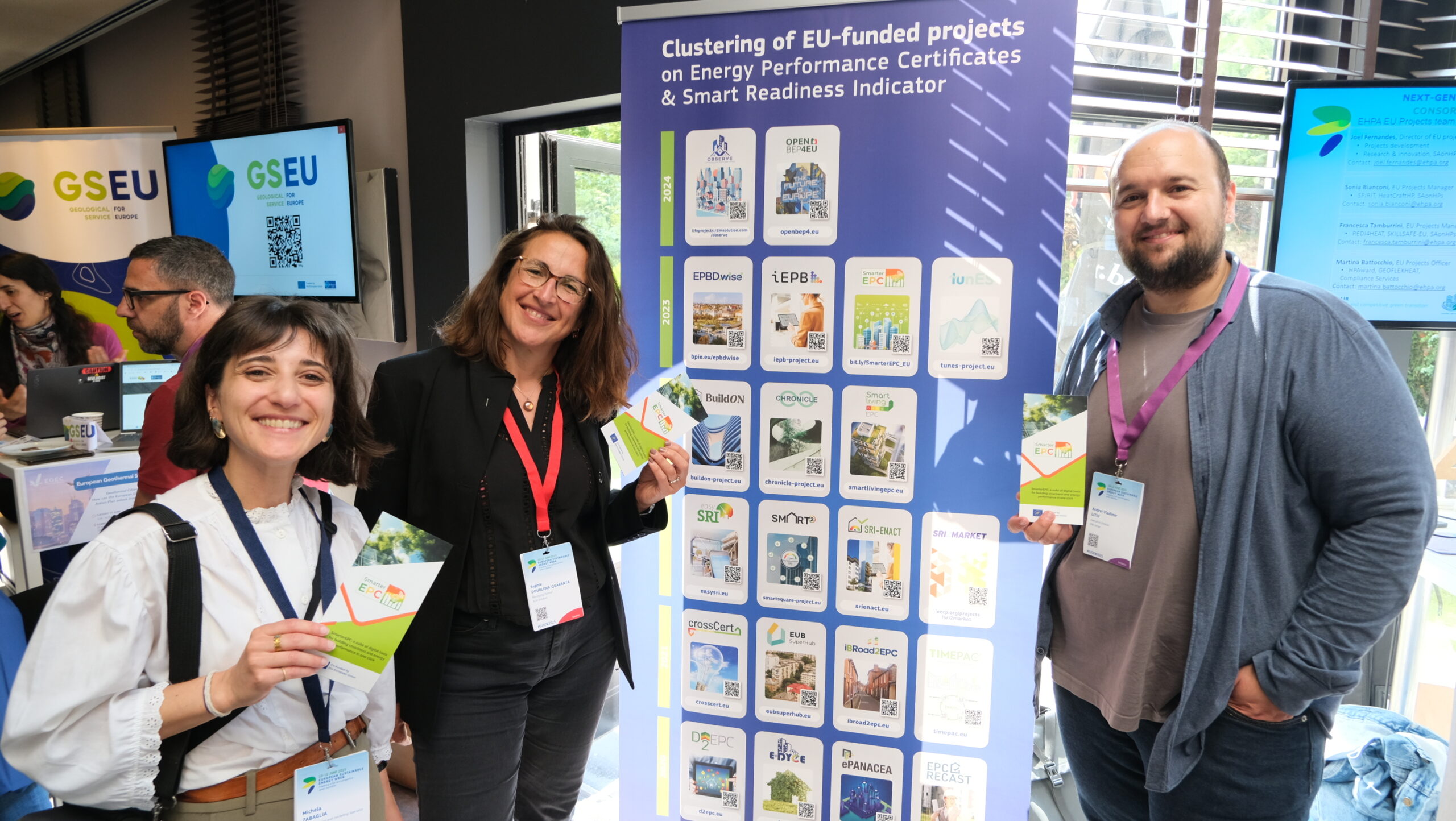
Showcasing Innovation at the Next Gen EPC Cluster Booth
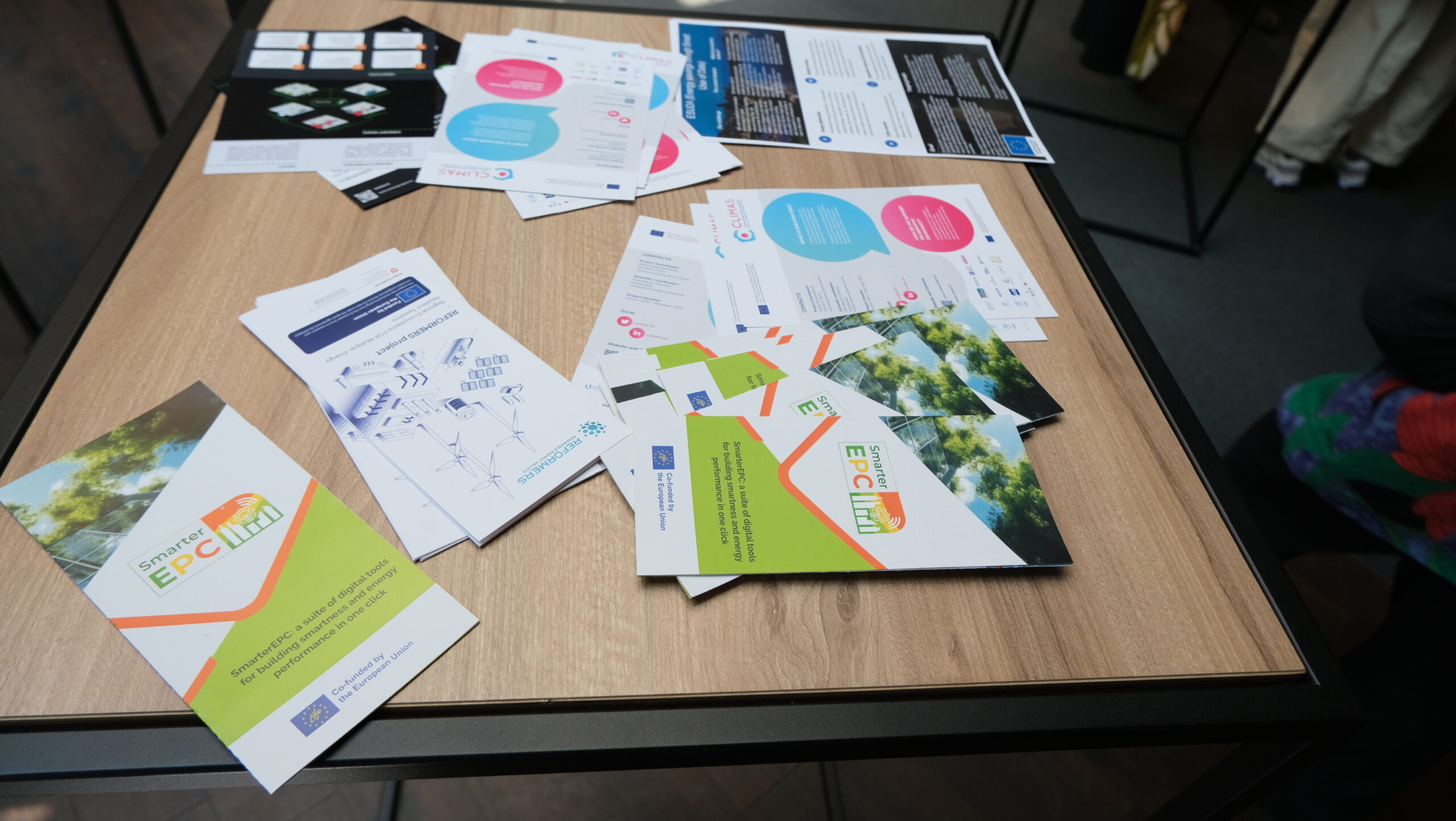
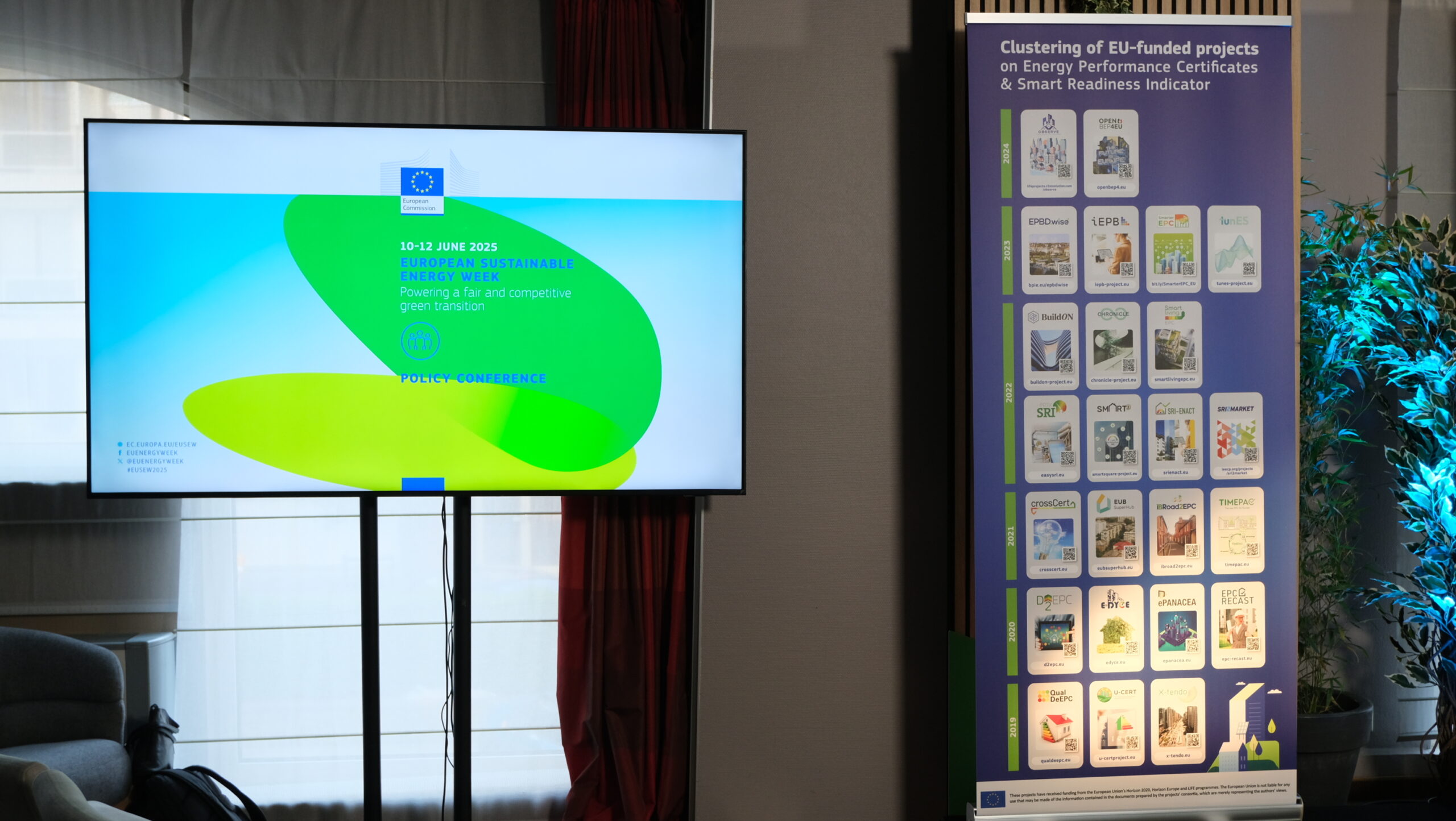
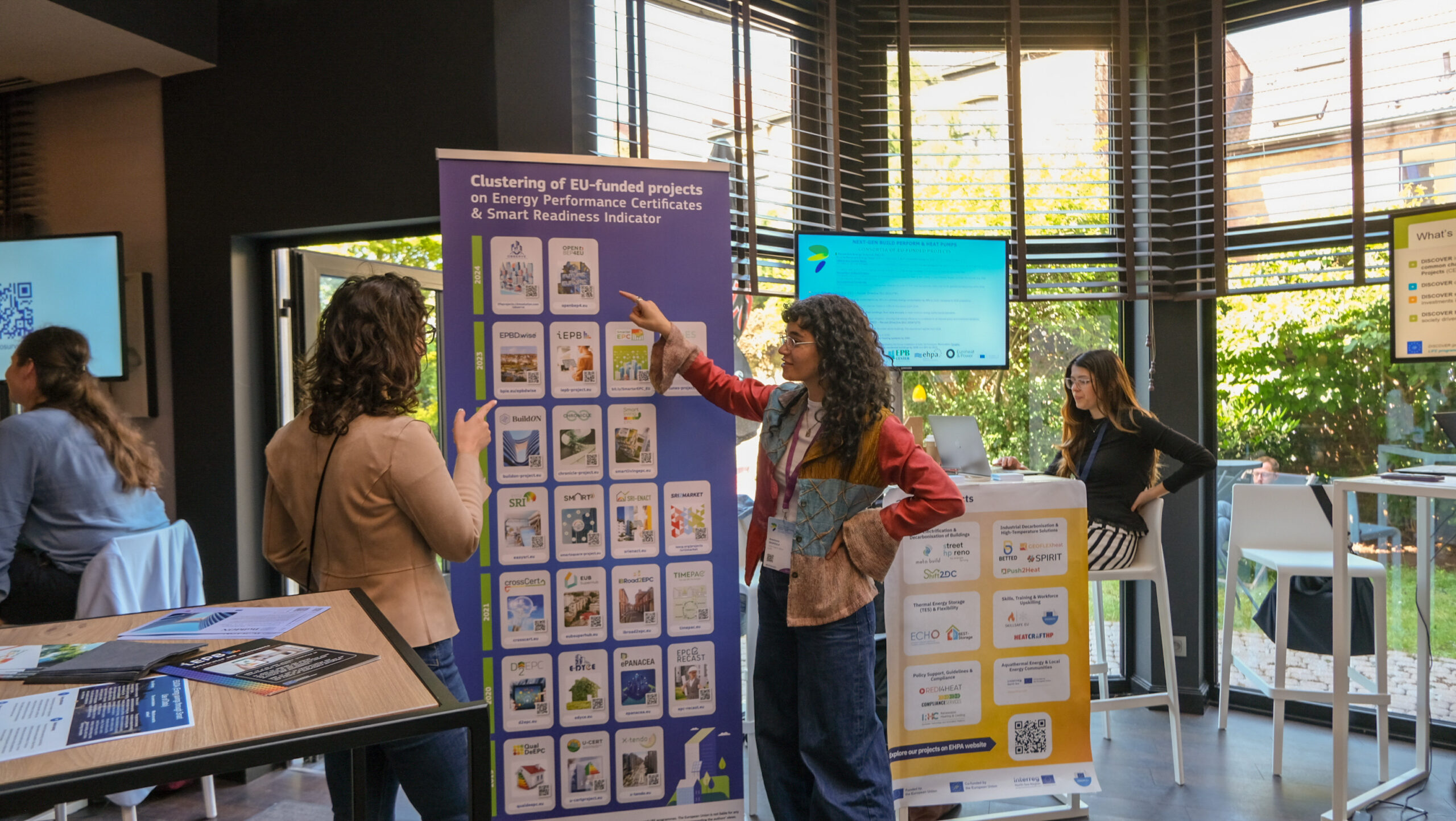
SmarterEPC also played a central role in the Next Gen EPC Cluster exhibition booth—an initiative uniting leading Horizon Europe and LIFE Programme projects focused on the digitalisation of EPCs and building data. This collective effort highlighted five years of EU-funded innovation to improve the reliability, transparency, and usability of EPCs across Member States.
With more than 75% of EU buildings constructed before 2000 and often performing poorly in terms of energy efficiency, the need for robust, digital, and interoperable EPCs is urgent. The SmarterEPC HUB provides assessors with a centralised digital platform to conduct joint EPC and SRI certifications, integrating tools from various EU projects into a single, user-friendly interface.
The Road Ahead: Digitalisation and Collaboration for a Climate-Neutral Building Sector
SmarterEPC’s involvement in EUSEW 2025 reaffirmed its commitment to supporting the digital transformation of the building sector. Through collaboration, innovation, and alignment with EU policies, the project is helping accelerate the transition to a more energy-efficient, resilient, and sustainable built environment.
We thank all partners, visitors, and stakeholders who contributed to the vibrant discussions throughout EUSEW 2025. As implementation of EPBD IV gains momentum, SmarterEPC remains a strategic partner in scaling digital solutions for building performance assessment and renovation planning across Europe.
FOLLOW SmarterEPC FOR FUTURE UPDATES!