
Developed by the SmarterEPC consortium, the training introduces a structured methodology for carrying out building inspections and collecting the data needed to support multiple assessment frameworks. More importantly, it allows the methodology to be tested by experienced assessors before its wider adoption.
Rather than being a conventional online course, the beta training is an opportunity to validate the proposed inspection procedure through practical experience and technical feedback from professionals working in the field.
Why standardising on-site data collection matters
Even when two assessors evaluate similar buildings, the outcome can vary depending on how information is collected, interpreted and documented.
Existing documentation may be incomplete, technical systems are not always straightforward to identify, and some information can only be verified during the site visit. As a result, inconsistencies in data collection can affect the quality of the final assessment.
The methodology developed by SmarterEPC provides a structured workflow that supports assessors throughout the entire inspection process, from preparing the site visit and reviewing available documentation to collecting evidence and completing the final dataset.
The objective is to promote a more consistent approach that improves transparency, traceability and the overall quality of building assessments, not to replace national assessment methodologies.
One inspection supporting multiple assessment frameworks
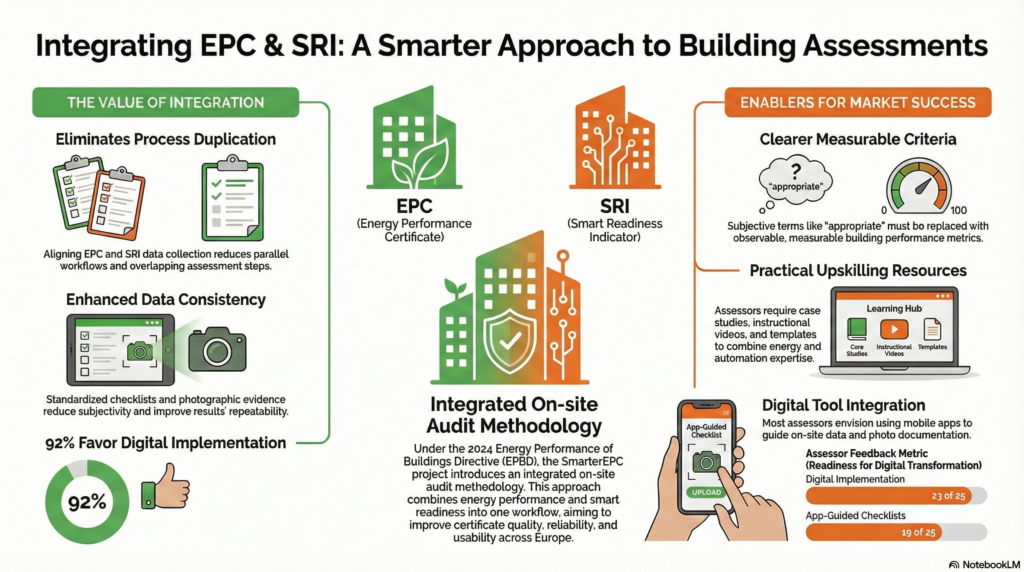
A key feature of the SmarterEPC methodology is its integrated approach.
Instead of treating each assessment as a separate process, the proposed procedure is designed to collect information that can support multiple outputs during a single building inspection, including:
- Energy Performance Certificates (EPCs);
- Building Renovation Passports (BRPs);
- Technical Building Systems (TBS) inspections;
- Smart Readiness Indicator (SRI) assessments.
By reducing duplicated data collection and creating a shared information base, the methodology helps make the assessment process more efficient while ensuring greater consistency between different evaluation tools.
What does the beta training include?
The training programme includes 16 learning modules, almost 11 hours of recorded video content, thematic quizzes and dedicated feedback forums.
Participants are guided through every stage of the assessment process, including:
- understanding the policy context of the revised EPBD;
- planning and organising an on-site assessment;
- collecting general building information;
- assessing the building envelope;
- inspecting heating, cooling, ventilation and domestic hot water systems;
- using measured energy consumption data;
- integrating Smart Readiness Indicator information;
- preparing the final assessment deliverables.
Beyond the technical content, the training places strong emphasis on documenting data sources, recording supporting evidence and improving the traceability of the information used throughout the assessment process.
Good news for you!
SmarterEPC team is developing a free training course to address the upskilling needs highlighted by assessors, covering EPCs, the SRI and the integrated on-site audit methodology.
Sign up for our newsletter to stay updated on the training release and related SmarterEPC project outputs.
A collaborative validation process
The training has been released as a beta version because both the learning materials and the inspection methodology are still being refined.
As part of this validation phase, the SmarterEPC consortium invited a group of experienced assessors from across Europe to test the platform, complete the training modules and provide detailed technical feedback based on their professional experience.
Their observations are helping identify practical challenges, improve the clarity of the methodology and refine the training materials before their wider release.
From September, the platform will be openly available to all interested professionals, giving a broader audience the opportunity to explore the methodology and contribute to its uptake across Europe.
Supporting the next generation of building assessments
Throughout the SmarterEPC project, the consortium has explored how EPCs, Building Renovation Passports and the Smart Readiness Indicator can work together to provide a more complete picture of building performance.
The beta training represents one of the final milestones of the SmarterEPC project. After being tested by a first group of external assessors during the validation phase, the platform will be opened to the wider professional community from September, allowing energy assessors and other building professionals to explore the methodology and support its wider adoption.
By helping professionals conduct on-site inspections more consistently and transparently, SmarterEPC improves the quality of building data, which is essential for reliable Energy Performance Certificates, Building Renovation Passports, and Smart Readiness Indicator assessments across Europe.
Sign up for our newsletter to stay updated on the training release and related SmarterEPC project outputs.