
Advancements in Energy Performance Tools: the new EPC Atlas

SmarterEPC launched EPC Atlas, the tool that provides a broad and comprehensive assessment of available tools for calculations of Energy Performance Certificates (EPC) and Smart Readiness Indicators (SRI). The EPC Atlas is a key tool for cataloguing and analyzing EPC Tools in the EU giving a solid base for European integration.
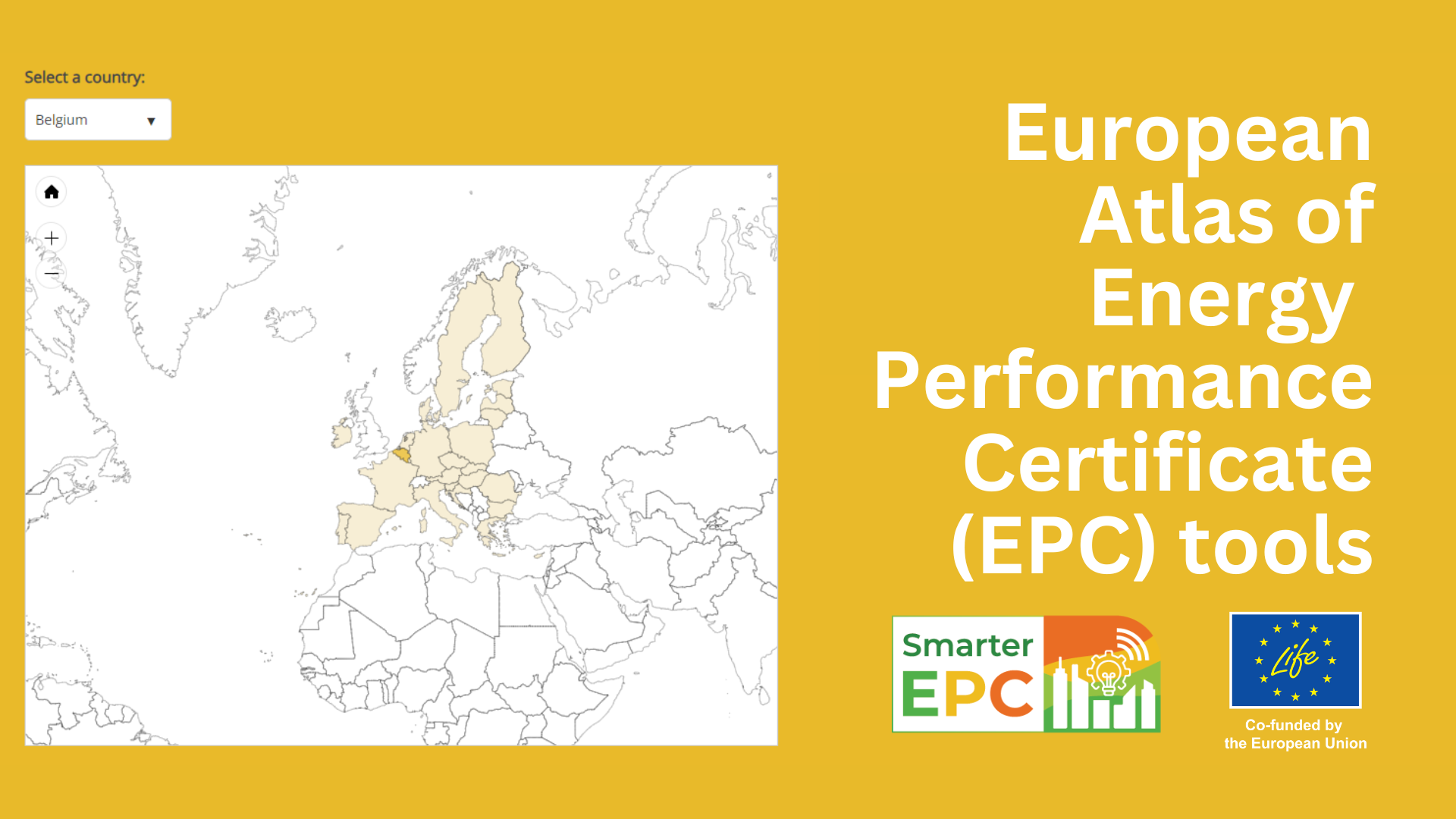
European Atlas of Energy Performance Certificate (EPC) tools

The main SmarterEPC project objective certainly is to contribute to the enhancement of the tools that support the assessment of Energy Performance Certificates (EPC) and Smart Readiness Indicators (SRI) in Europe with the aim of full standardisation in the Union and support to operators in the sector.

The EPC Atlas is one of the project outcomes to fulfil its mission to provide a comprehensive overview for the evaluation of EPC tools in Member States and identify opportunities for refinement and enhanced integration.

Comprehensive Assessment of EPC and SRI Tools

The analysis examined in detail over 85 EPC tools and various SRI applications, focusing on their functionalities, input methods, and compliance across the 27 EU Member States. This effort highlights a commitment to raising the standards of energy performance evaluations throughout the EU, aiming to enhance the quality of these assessments.

Introducing the Atlas of EPC Tools

One of the key outputs from this evaluation is the development of the EPC Atlas—a user-friendly digital interface that maps EPC tools across Europe. This Atlas serves as an essential resource for various stakeholders, including policymakers and building owners. Designed according to the ISO/IEC/IEEE 42010:2022 standards, the Atlas integrates Service-Oriented Architecture (SOA), ensuring robustness, adaptability, and interoperability.

Atlas Features and Capabilities

The EPC Atlas will offer a variety of features to enhance user interaction and data accessibility:

  • Interactive User Interface: Navigate through a dynamic European map to explore EPC tools available in each country.
  • Detailed Tool Insights (in progress): Each tool is documented with specifics on features, compliance, and user feedback, aiding stakeholders in making informed decisions.
  • Cost Structures and Compliance Details (in progress): Users can assess financial implications and regulatory adherence, facilitating a tailored selection of tools.
Navigating the EPC Atlas: A Visual Guide to Europe's Energy Performance Tools
The User-Friendly Interface of the EPC Atlas
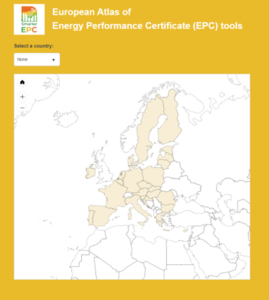
Figure 1. The User-Friendly Interface of the EPC Atlas: Showcasing a dynamic European map that provides insights into the diverse landscape of available energy performance tools.
Detailed View of EPC Tools, in the EPC Atlas
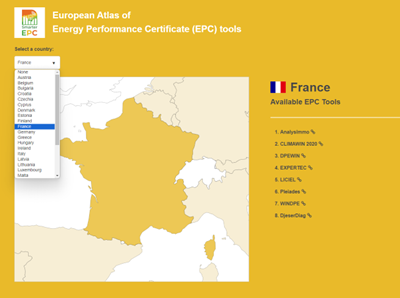
A detailed display of the interface of the EPC Atlas
Figure 2. Discover a detailed display of Energy Performance Certificate tools for each country, with each tool clickable for additional information. This feature showcases Atlas's ability to offer localized data tailored to individual EU member states, e.g EPC tools available in France.

Future Directions for the EPC Atlas

Looking ahead, the EPC Atlas is set to evolve continuously, integrating user feedback and adapting to technological advancements. Planned enhancements include:

  • Expansion of Data Sources: To offer a more holistic view of building performance.
  • Advanced Analytical Tools: Leveraging machine learning for predictive insights and optimization strategies.
  • User-Centric Features: Enhanced customization and interaction to improve user engagement and utility.

Explore the EPC Atlas

Discover the EPC Atlas and its comprehensive features by visiting www.epc-atlas.eu.

By centralizing data and resources, the EPC Atlas actively supports the EU’s efforts to enhance building energy performance, serving as a dynamic resource for stakeholders in the energy certification landscape.

For a full description of ATLAS and SmarterEPC objectives and goals, explore SmarterEPC report D2.1 .

Read more about the project

Or subscribe to our newsletter to stay updated with the latest developments of our projects.

By clicking Sign Up you’re confirming that you agree with our Terms and Conditions.

SmarterEPC

Integrating Energy Performance and Smart Readiness Indicator: Insights from assessors

SmarterEPC surveyed 25 building performance assessors to test the integration of Energy Performance Certificates with Smart Readiness Indicator assessments. The SmarterEPC methodology promises to streamline building audits under the revised EPBD, but assessors emphasise the need for clearer criteria, practical training, and digital tools to ensure successful implementation across Europe. Read what we found out.

Read More »
Observe

Some news from CIEMAT !

On 4 and 5 November, the 2nd URBAN MOME Network Conference was held in Barcelona under the theme “Towards efficient urban environments through modelling, measurement and control in the built environment.” CIEMAT participated through its Building Energy Efficiency R&D Unit, presenting the European OBSERVE project and reaffirming its leading role within the URBAN MOME Network. Coordinated by CIEMAT, the Network provides a platform for knowledge exchange on modelling, measurement and control in the building sector, with the objective of improving

Read More »
EPCs in Italy
SmarterEPC

The state of the EPCs in Italy: progress and challenges

The Energy Performance Certificate (EPC), introduced in Italy in 2005 with the 2002 EPBD Directive, is a fundamental tool for building management for owners, operators, and institutions alike. Aside from the benefits, what is the current state of EPCs in Italy? Every year, ENEA publishes a report on EPCs to analyze the state of the art of this certification, which is still not fully exploited in all its potential.

Read More »
Observe

Some news from ENEA

Over the past months, ENEA has been contributing to the OBSERVE project by supporting the development of a structured assessment approach to describe national building data ecosystems and inform the definition of national Building Stock Observatories (nBSO) archetypes and their key functional building blocks. ENEA has been actively involved in stakeholder engagement activities, including the collection and evaluation of inputs from national stakeholders and European policymakers. These efforts help improve the understanding of institutional needs and current practices related to

Read More »
Observe

Some news from Eurac Research

Over the past months, Eurac Research has contributed to stakeholder engagement strategies and participated in knowledge-sharing activities, including presenting synergies with related initiatives.  In parallel, we have supported the mapping of building stock data and carried out policy analysis for Deliverables D2.1 and D2.2 (project deliverables focusing on stakeholder needs) and requirements for establishing national Building Stock Observatories, and on policies and existing tools at national and EU level, respectively ensuring alignment with EU frameworks and Member State priorities.  These

Read More »
Observe

Some news from Euphyia Tech LTD

“Over the last months we had contacted Ministry of Energy Commerce and Industry of Cyprus to introduce our project and the roadmap, provide them the WP2 and WP4 questionnaires and cooperate to receive help from the lead public authority regarding our project. We had a meeting and after the meeting we received feedback from our official authority.  We received feedback with completed questionnaires and comments for projects roadmap for Cyprus and updated the partners accordingly. The comments were; Key remarks

Read More »